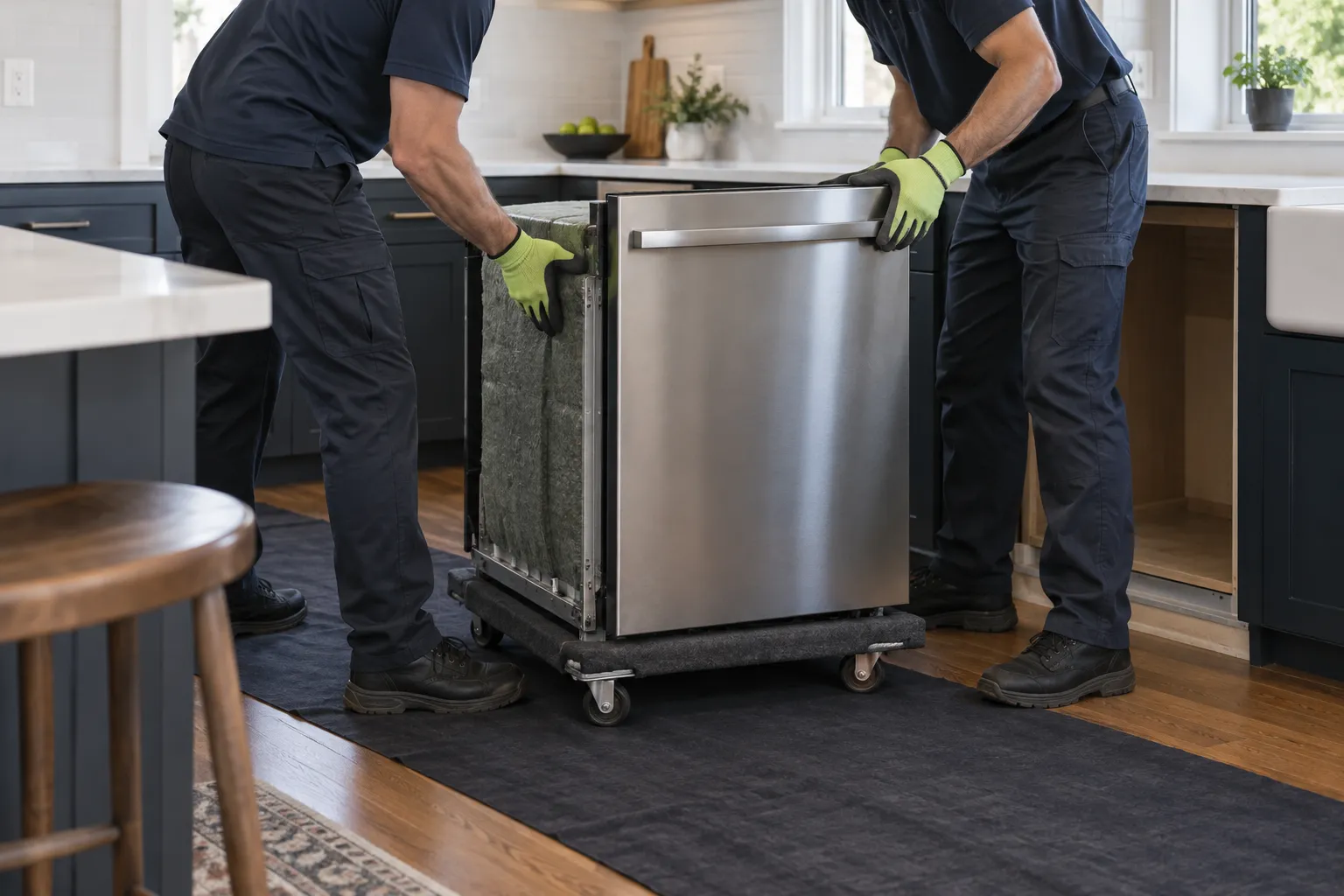
A built-in dishwasher is ready for hauling after it has been disconnected, drained, released from the counter or cabinets, and pulled forward without damaging the floor.
Confirm the unit is truly free
Opening the dishwasher door does not show whether mounting screws, side brackets, trim, water lines, drain lines, or power connections remain attached. Follow the manufacturer’s instructions or use qualified appliance help to release the unit safely.
Plan for residual water
Dishwashers can retain water in the sump, hose, or filter area. Drain the unit according to its manual and keep towels or a shallow tray nearby during preparation. Do not tip a water-filled dishwasher over finished flooring.
Protect cabinets and flooring
Measure the cabinet opening and note tight flooring lips or trim that may catch the feet. Use proper floor protection along the entire route. If the appliance binds inside the opening, stop and find the remaining fastener or obstruction rather than forcing it.
Remove racks and loose pieces
Empty dishes, silverware baskets, racks that slide freely, and removable filters if the manual recommends it. Secure the door for transport without using an adhesive that could damage the finish.
Share the pickup setup
Tell the provider whether the dishwasher is built-in or portable, whether it is already out of the cabinet, how far it must travel, and whether there are stairs. That information separates hauling from installation work before anyone arrives.
Pickup-readiness checklist
- Water, drain, and power disconnected
- Mounting brackets released
- Standing water removed
- Cabinet opening checked
- Floor route protected
- Unit location and stairs disclosed
Next step
Use the estimate checklist to collect dimensions, disconnection status, steps, turns, and parking distance. That information makes the first conversation more useful.
Open the estimate checklist