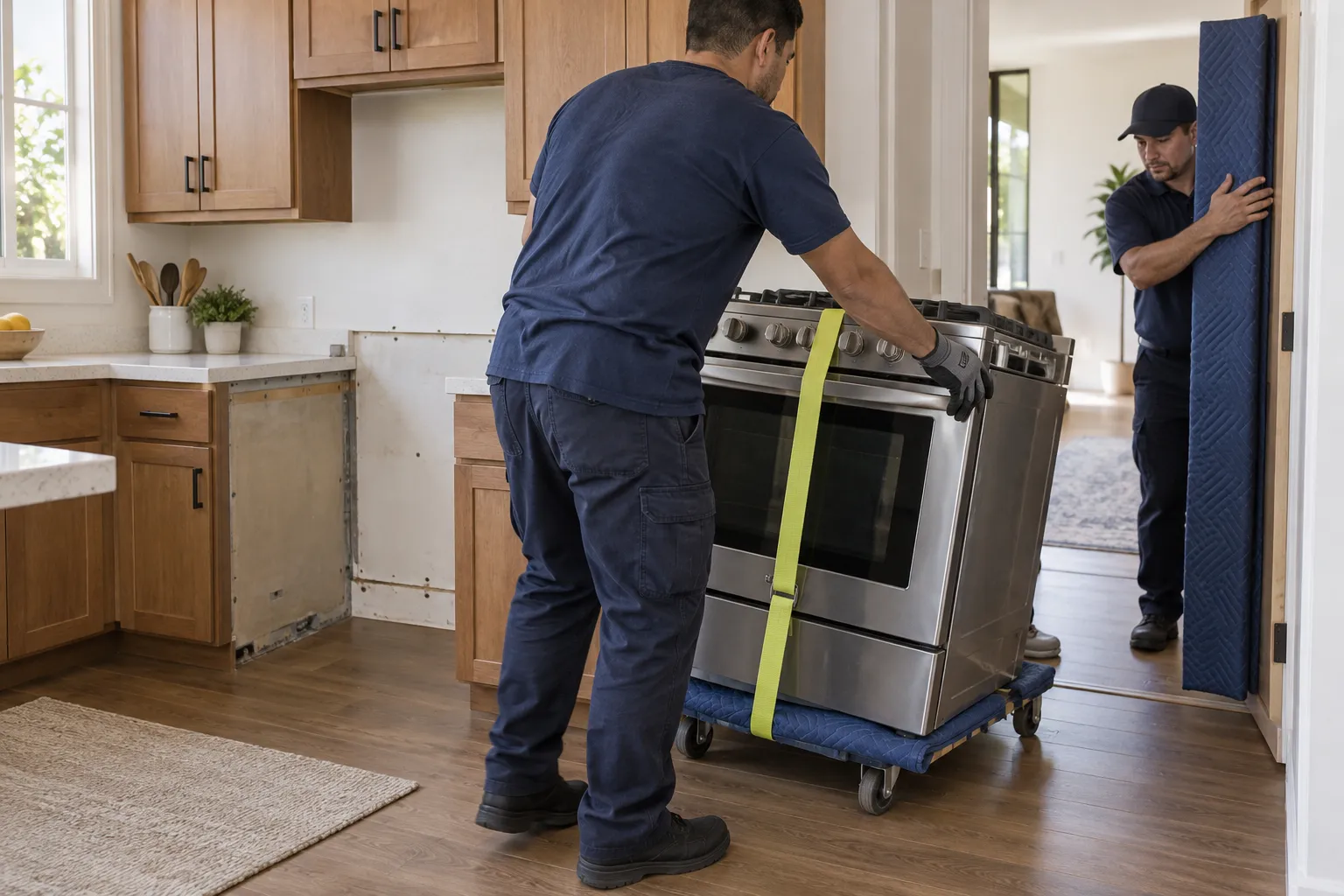
Remove racks and cookware, identify the fuel type, arrange qualified gas or hardwired electrical disconnection, and confirm that built-in units are free from cabinetry before the hauling appointment.
Identify the appliance configuration
A freestanding range, slide-in range, wall oven, and cooktop do not present the same removal job. Record the model type and whether it is gas, electric, or dual fuel. Built-in equipment may need cabinet, trim, or countertop work that belongs outside ordinary hauling scope.
Finish disconnection before hauling begins
Gas lines and hardwired electrical connections should be handled by qualified professionals. The hauling crew should find the appliance disconnected, safe to move, and free of fixed mounting points. Do not pull a connected range forward to “make it easier” if doing so strains a line or cable.
Remove loose interior parts
Take out racks, broiler pans, temperature probes, and removable grates. Pack or dispose of them according to your plan. Secure doors only with a method approved by the manufacturer; adhesive tape can damage some finishes.
Protect the kitchen route
Check cabinet corners, island clearance, flooring transitions, and the direction each door swings. Note any threshold or step between the kitchen and the driveway. The safest route may not be the shortest one.
Describe estimate factors clearly
Share the fuel type, installation style, appliance dimensions, stair count, and parking distance. If a wall oven is still inside the cabinet, say so before scheduling because the job is not yet ready for ordinary pickup.
Pickup-readiness checklist
- Fuel type identified
- Qualified disconnection complete
- Built-in unit released from cabinetry
- Racks and loose parts removed
- Cabinet corners and floor protected
- Route and steps measured
Next step
Use the estimate checklist to collect dimensions, disconnection status, steps, turns, and parking distance. That information makes the first conversation more useful.
Open the estimate checklist