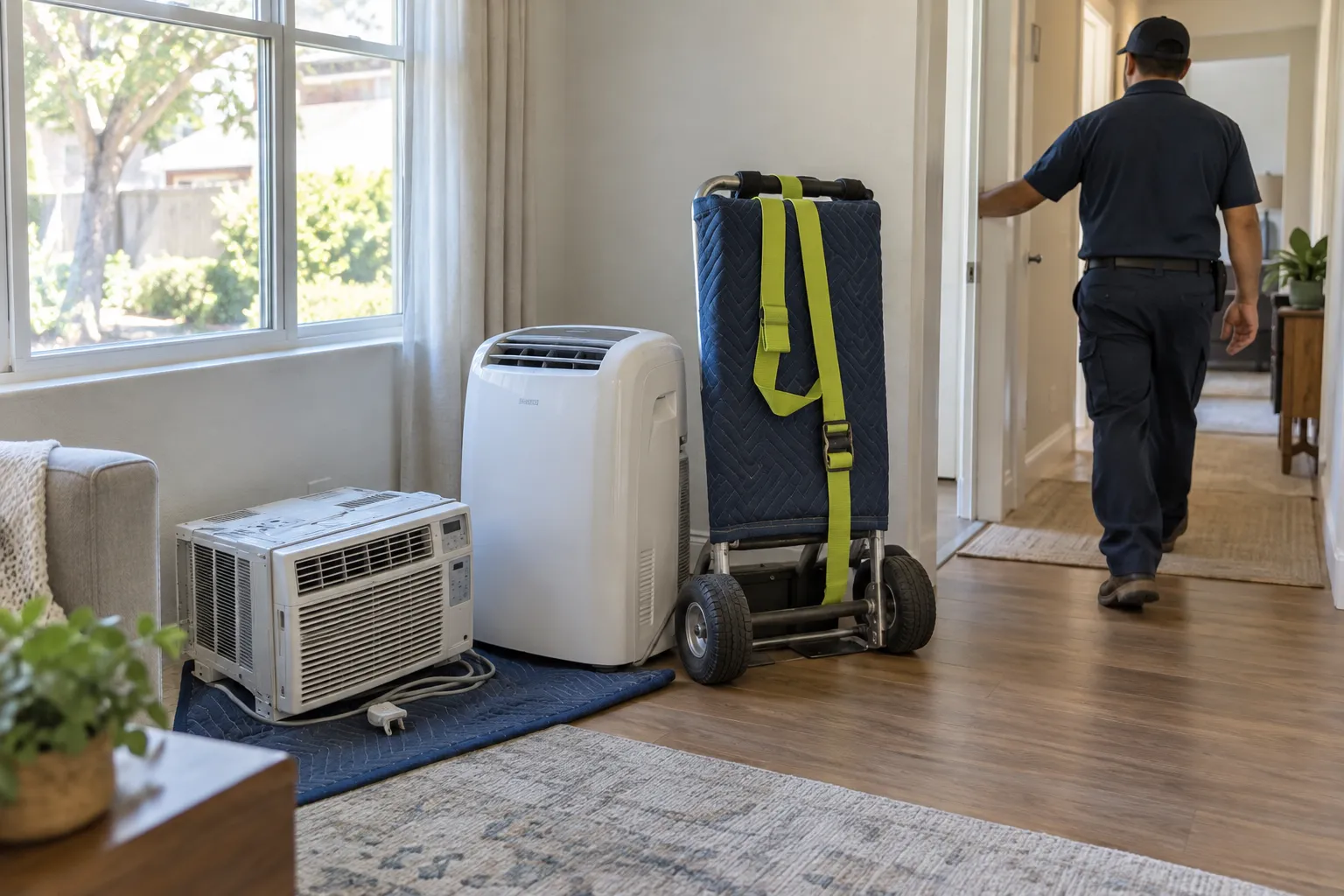
Unplug the unit, drain condensate as the manual directs, remove a window unit safely from its opening, keep the refrigerant system intact, and choose a disposal route that can handle refrigerated appliances.
Know which equipment this covers
Window units, portable room air conditioners, and dehumidifiers are self-contained appliances. Central condensers, mini-splits, and fixed HVAC equipment require qualified HVAC assessment and are outside an ordinary room-unit pickup.
Drain water without opening refrigerant components
Portable and window units can hold condensate. Use the manufacturer’s drain procedure and keep the appliance upright where possible. Do not cut tubing, drill the housing, or remove the compressor.
Remove window units before pickup
A window air conditioner should be free of brackets, sashes, and building attachments before the hauling appointment. These units can be heavier on one side, so plan for safe support and use qualified help if the removal itself is uncertain.
Keep the sealed system intact
The EPA says the knowing release of most refrigerants during appliance disposal is prohibited and advises consumers not to tamper with refrigerant-containing appliances. A proper collection route manages the appliance without venting its contents.
Compare local and in-home options
Municipal programs may accept air conditioners at scheduled events or through appliance programs, but rules can require residency proof, curb placement, self-unloading, or an appointment. Use in-home hauling when access and lifting help are the deciding needs.
Pickup-readiness checklist
- Correct equipment type confirmed
- Unit unplugged
- Condensate drained per manual
- Window unit removed from building
- Refrigerant system untouched
- Stairs and route disclosed
Next step
Use the estimate checklist to collect dimensions, disconnection status, steps, turns, and parking distance. That information makes the first conversation more useful.
Open the estimate checklist